Why the theme Handling big feelings makes a good book
An adventure that suits the child
Children feel things just as strongly as adults but have fewer words for them. Anger can feel like heat in the tummy, worry like a lump in the throat, joy like wanting to jump. A book about understanding your feelings gives your child pictures and words for what is going on inside. When they see themselves meet happiness, sadness, anger and fear in the story, and notice that each one can be felt without anything dreadful happening, those feelings become a little easier to recognise the next time they come along.
A journey through the house of feelings
The story can let the hero visit one feeling at a time and find out what each one wants. Happiness wants to share. Sadness wants comfort. Anger says that something is unfair, and fear wants to keep you safe. The hero can help the angry figure to breathe, sit beside the sad one without saying anything, and notice that two feelings can be there at the same time, like being happy and nervous before a party. Perhaps it is fear that finally shows the way out of the house, because it has been keeping an eye on everything all along.
Words that fit your child
Think about the moments that tend to stir up feelings at home, and tell us a few: drop-off at nursery, losing at a game, a friend moving away. Use the words your child has for their own feelings, and let a trusted grown-up, a big brother or the cat be there too. The book doesn't need to fix anything. It can simply show that everyone feels this way sometimes.
For the youngest, faces and simple words are enough: happy, sad, cross. Pre-schoolers recognise drop-offs, parties and squabbles over toys, with a calm turn at the end. Six-year-olds can think about why a feeling came and what it wanted, and a ten-year-old can read about feelings that are harder to untangle, such as shame or envy. If it is mostly anger that fills the room in your house, there is also the Tantrums theme.
Where does the feeling live in your body?
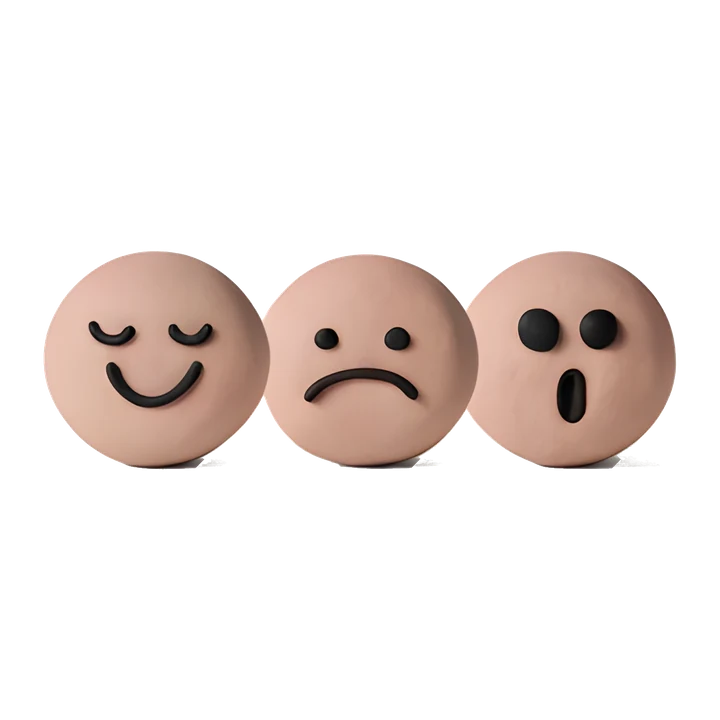
An easy conversation after reading is to ask where in the body a feeling sits. Happiness might tickle in the legs, worry might press on the tummy and anger might burn in the hands. Draw a simple body outline together and colour in the places. There are no wrong answers, and your child's drawing often says more than words. Then pull faces in the mirror: what does cross look like, and what does surprised look like?
Your child is the hero
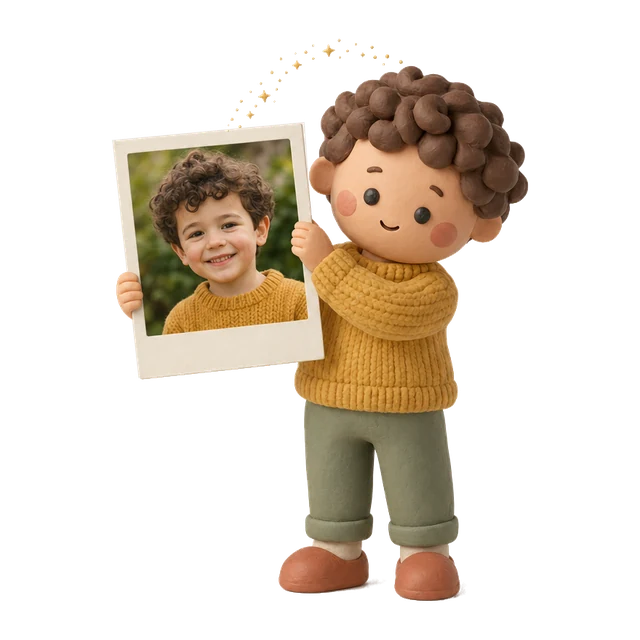
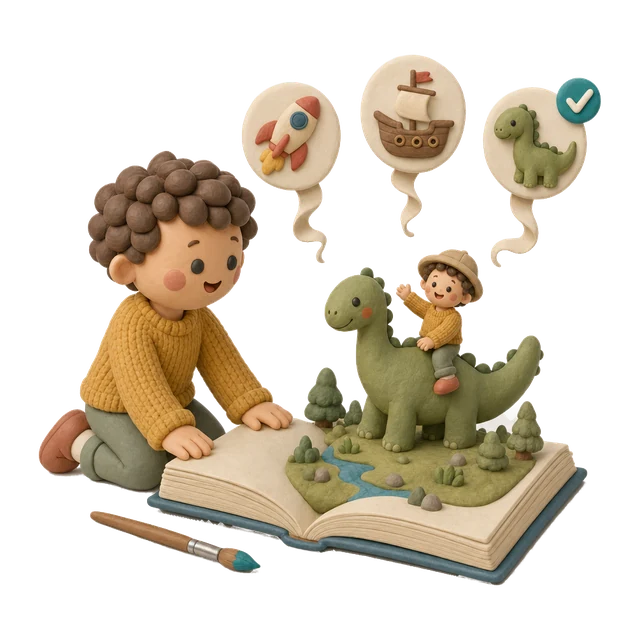
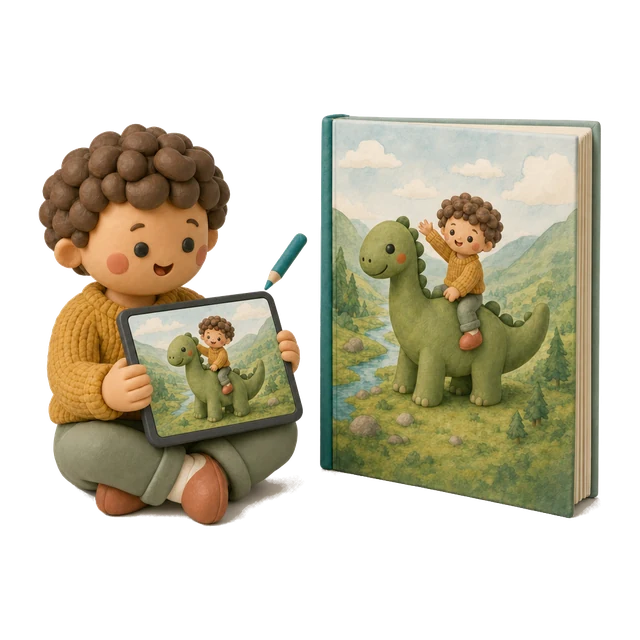
You fill in the child's name, age and what they like, and upload a photo. The story about understanding your feelings is written for your very own child, and the thirteen pictures and the cover are drawn from the photo in the style you choose. Brothers and sisters, parents, grandparents or the pet can come along, up to five characters. If you would like to include something that has happened lately, a trip or a lost tooth, just write it and it is woven in.
From eBook to hardback book
The eBook is ready a few minutes after payment. Read it, change the text and ask for new pictures until you are happy. Then order it as an A4 hardback book, printed and sent to your door, or straight to the child as a gift. Do add the audiobook or the colouring pages. Start creating the book or read more about the prices. Would you like to see a finished book before you decide? Browse our example books.
How the story could begin
You wake up in a room where every wall is a different colour. One is yellow and warm, another blue like the sea on a rainy day. The third is red, and the fourth is grey and a bit misty. In each wall there is a door. In front of the yellow one sits a little figure bouncing up and down. “Come and visit me,” it says, laughing so hard it bubbles. By the blue door sits another, wiping its eyes on its sleeve. By the red one, someone is stamping and hissing. And the grey door is open just a crack, but whoever lives there doesn't dare peep out. You stay where you are, in the middle of the room. Then a voice comes from all four doors at once: “Which of us will you visit first?”
 Christmas
 Birthday
 Unicorns
 Dinosaurs
 Pirates
 Space
 Princes and princesses
 Fire brigade
 Sport
 Mermaids
 Superheroes
 Knights and dragons
 Construction vehicles
 Starting school
 A trip to the farm
 Jungle
 Fairies
 Treasure hunt
 Underwater
 A new baby
 Brushing teeth
 Confidence
 Bedtime story
 The enchanted forest
 Witches and spells
 Giants
 Gnomes
 Wizard school
 Camping
 Time travel
 Haunted house
 Police
 Racing
 Aeroplanes
 Secret mission
 The zoo
 Dressing up
 Building a tree house
 The amusement park
 A train journey
 A visit to the doctor
 The dentist
 The library
 The beach
 The forest
 Baking
 Music
 Dance
 Ancient Egypt
 The Stone Age
 The Vikings
 In the future
 The Middle Ages
 Candy land
 At the North Pole
 The savannah
 Easter
 Halloween
 Lucia
 Midsummer
 New Year
 Name day
 Eid
 Hanukkah
 Becoming a big brother or sister
 Father's Day
 Mother's Day
 Grandparents
 A new pet
 Moving house
 Sleepovers
 A wedding
 Holiday
 Learning to ride a bike
 Giving up the dummy
 Potty training
 Tidying up
 Eating well
 Learning to tell the time
 Learning to count
 The alphabet
 Seasons and weather
 Afraid of the dark
 Tantrums
 Feeling homesick
 Being teased
 Jealousy
 Feeling proud
 Handling big feelings
 Funny story
 Olivia
 Muhammad