Why the theme Camping makes a good book
An adventure that suits the child
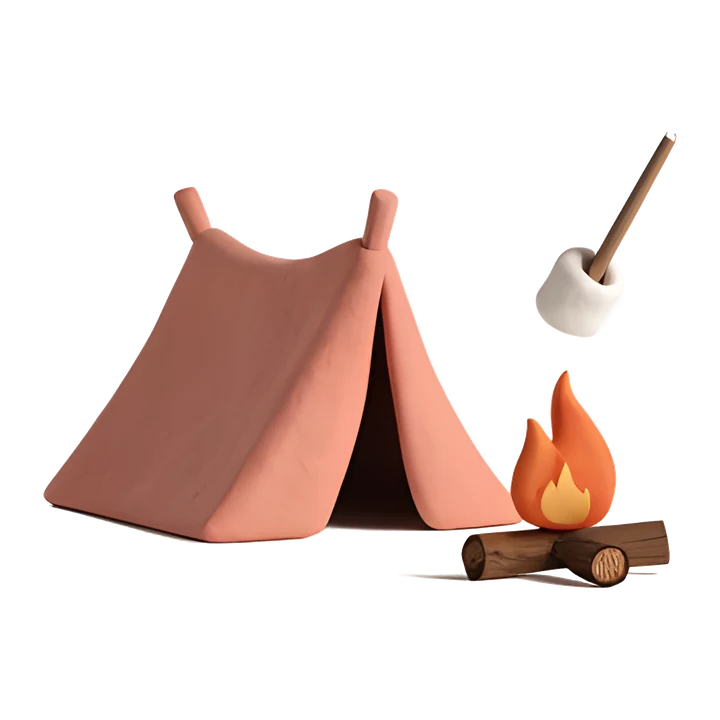
Sleeping in a tent means sleeping almost outdoors. The canvas is so thin that you can hear the rain, the birds and every twig that snaps. For a child, that's both exciting and a little bit scary, and it's exactly that mix that makes camping such a rewarding subject. In the book, your child carries the kit, finds the spot, pushes in the tent pegs and is the one brave enough to peek out when something rustles. The night in the woods turns out to be full of life, and the sleeping bag feels extra cosy afterwards.
A night in the tent, a day by the lake
A camping book can begin with the packing and end with the trip home. Your child can get the tent to stand up even though a pole is missing, cook on a camping stove with a grown-up, discover that the rustling in the night was a hedgehog hunting for worms, or fish out a bottle with a message from the other side of the lake. Rain can be part of the adventure: it drums on the canvas and becomes a sort of song. The morning can begin with hot chocolate from a flask on a sun-warmed rock.
Your own camping spot
The best starting point is a trip you've already taken or are planning. Write in where you camped, who snored, what you cooked over the fire and whether anything went wrong in a way that became a family story. If you've never camped, a night in the garden or a sheet tent in the living room works just as well. Bring along the dog, a brother or sister or the friend who always wants to come too. If your child would rather go walking than sleep outside, the forest has a theme of its own.
A night in the tent sounds different depending on who's listening. For a child under three, the book is about sounds and lights: the bird, the fire, the moon, an owl hooting. A four-year-old enjoys a whole day from packing to goodnight, with sausages on sticks in the middle. Around six, the hero can sort something out alone, like finding the way back to camp, and a twelve-year-old likes it when the night gets a little spooky before everything is explained.
Leave no trace, and a listening game
Where you may pitch a tent depends on where you are. In Scotland you can camp wild on most open land if you follow the outdoor access code, while in most of England and Wales you need a campsite or the landowner's permission. Everywhere, the rule is the same: leave the place just as you found it. That can start a conversation after reading – what does it really mean? Then switch off the light and listen together for a minute. How many sounds can you hear? Take your rubbish home and put the fire out properly before you leave.
Your child is the hero
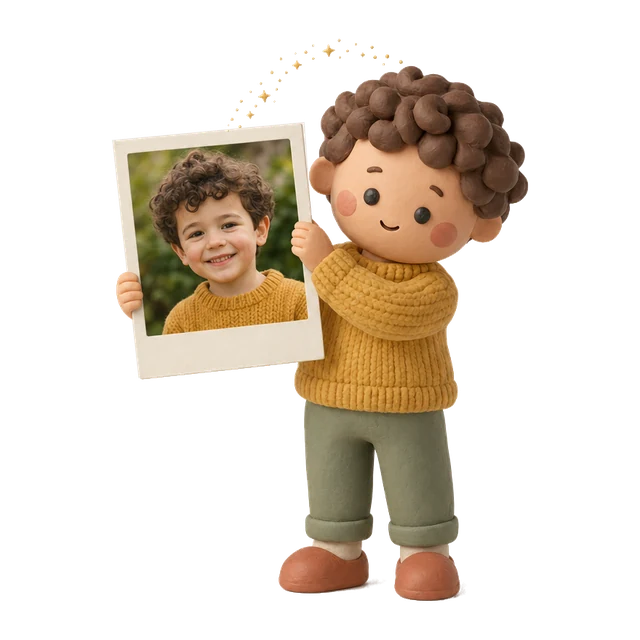
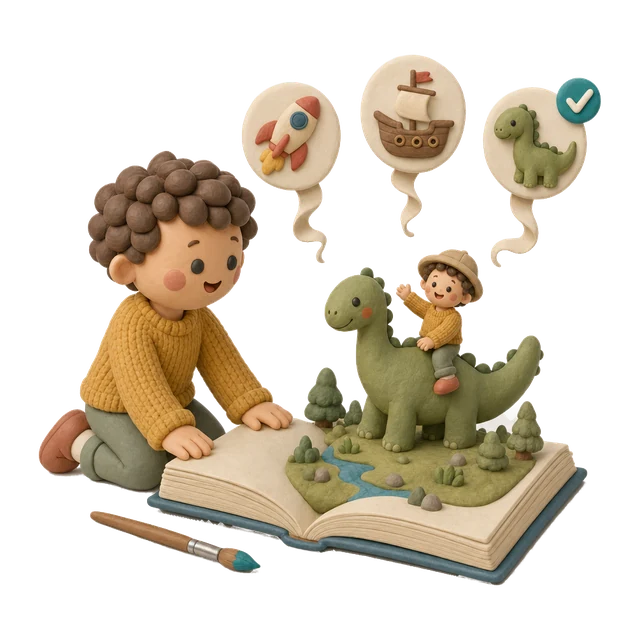
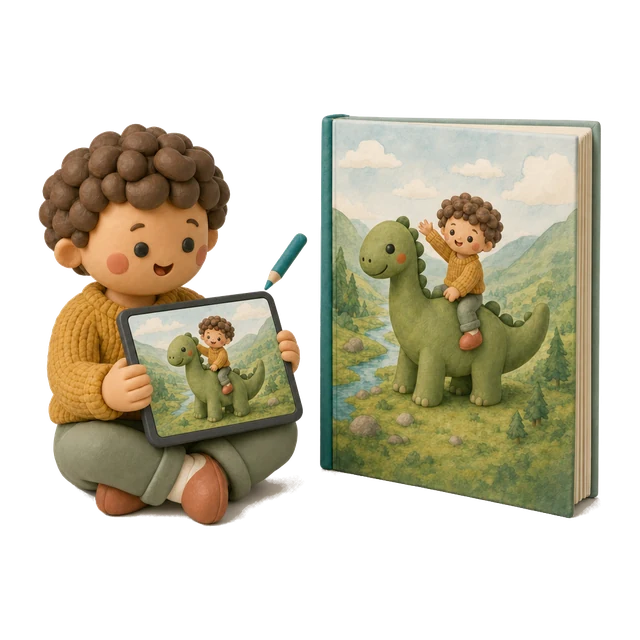
You fill in the child's name, age and what they like, and upload a photo. The story about camping is written for your very own child, and the thirteen pictures and the cover are drawn from the photo in the style you choose. Brothers and sisters, parents, grandparents or the pet can come along, up to five characters. If you would like to include something that has happened lately, a trip or a lost tooth, just write it and it is woven in.
From eBook to hardback book
The eBook is ready a few minutes after payment. Read it, change the text and ask for new pictures until you are happy. Then order it as an A4 hardback book, printed and sent to your door, or straight to the child as a gift. Do add the audiobook or the colouring pages. Start creating the book or read more about the prices. Would you like to see a finished book before you decide? Browse our example books.
How the story could begin
You pull down the zip, and the cold morning air creeps in. It smells of pine and wet moss. The dew has left little pearls on the shoes you put outside last night. Someone is still snuffling in their sleeping bag next to you. You crawl out on your knees. The lake lies perfectly still, and above the water floats a thin mist that looks like milk. All that's left of last night's campfire is grey ash, but when you poke it with a stick, it still glows red at the bottom. That's when you see the tracks. They run in a line through the damp sand at the water's edge, right past the tent, and they're not from a dog. They're small, with five toes, and they end at a hollow stump where someone has left a shiny bottle top, quite clearly for you.
 Christmas
 Birthday
 Unicorns
 Dinosaurs
 Pirates
 Space
 Princes and princesses
 Fire brigade
 Sport
 Mermaids
 Superheroes
 Knights and dragons
 Construction vehicles
 Starting school
 A trip to the farm
 Jungle
 Fairies
 Treasure hunt
 Underwater
 A new baby
 Brushing teeth
 Confidence
 Bedtime story
 The enchanted forest
 Witches and spells
 Giants
 Gnomes
 Wizard school
 Camping
 Time travel
 Haunted house
 Police
 Racing
 Aeroplanes
 Secret mission
 The zoo
 Dressing up
 Building a tree house
 The amusement park
 A train journey
 A visit to the doctor
 The dentist
 The library
 The beach
 The forest
 Baking
 Music
 Dance
 Ancient Egypt
 The Stone Age
 The Vikings
 In the future
 The Middle Ages
 Candy land
 At the North Pole
 The savannah
 Easter
 Halloween
 Lucia
 Midsummer
 New Year
 Name day
 Eid
 Hanukkah
 Becoming a big brother or sister
 Father's Day
 Mother's Day
 Grandparents
 A new pet
 Moving house
 Sleepovers
 A wedding
 Holiday
 Learning to ride a bike
 Giving up the dummy
 Potty training
 Tidying up
 Eating well
 Learning to tell the time
 Learning to count
 The alphabet
 Seasons and weather
 Afraid of the dark
 Tantrums
 Feeling homesick
 Being teased
 Jealousy
 Feeling proud
 Handling big feelings
 Funny story
 Olivia
 Muhammad